Infrared sauna glossary
Demystify infrared sauna confusion with these 128 terms and definitions
The infrared sauna industry is full of jargon. Wavelengths, emitters, carbon panels, full spectrum, EMF claims, even debates about what far infrared actually means. This infrared sauna glossary cuts through all that. Every term is written in plain English, with enough detail to be genuinely useful, whether you’re comparing home cabins, a commercial install, or just trying to avoid buying into hype.
Use the search to jump straight to a term, or browse A–Z. You’ll also see relevant internal links where they genuinely help, so you can move from ‘what it means’ to making an informed buying decision with confidence.
128 terms
Tip: click any term to reveal the description.
#
- 13A plug vs hardwired
- Smaller infrared cabins sometimes run from a standard 13A UK plug, while larger or higher-power cabins may need a dedicated circuit and hardwiring. The difference is less about “performance” and more about safe current draw, nuisance tripping, and installation neatness. If you’re near the limit of a socket circuit that already runs other loads, a dedicated supply can make your sauna more reliable. Before you buy, check the rated watts, the plug type, and whether an RCD is required.
- 50 Hz mains electricity
- In the UK, almost all household mains electricity runs at 50 Hz. That matters in an infrared sauna because the power supply frequency influences the type of electromagnetic fields (EMF) produced by any energised wiring and heaters. A well-designed cabin keeps wiring runs short, routes them away from seating positions, and uses proper earthing and screening where appropriate. If “low EMF” is important to you, always ask where and how it was measured (at the heater surface vs at the bench).
- 60°C (typical upper limit)
- Infrared saunas are commonly used at lower air temperatures than traditional saunas, often topping out around 60–65°C depending on the design. Many people find that lower ambient heat feels easier to tolerate because the heaters warm you directly via radiant energy. The practical point: don’t chase the highest temperature number. Good cabins feel effective because of panel placement, even output, and a comfortable seating position—not because the thermostat reads a heroic figure. Start lower and build up gradually.
- 230V single-phase
- Most home infrared sauna cabins sold in the UK are designed for 230V single‑phase supply, which keeps installation straightforward compared with three‑phase commercial setups. For you, this mainly affects what can be installed where, what cable sizing is required, and whether the sauna can be moved easily later. A 230V design can still be powerful; the limiting factor is amperage on the circuit. When comparing models, focus on heater wattage, insulation, and panel coverage rather than assuming “single‑phase” means weak.
A
- Absorption
- Absorption describes how strongly a material takes in (rather than reflects or transmits) infrared energy. Your skin, clothing, hair, wood panels, and glass all absorb and re‑radiate heat differently, which changes how an infrared cabin feels. This is why two cabins at the same air temperature can feel very different. In practice, absorption is influenced by wavelength (near vs far infrared), distance to the emitters, and whether the heaters are “line of sight”. When choosing, look for even coverage and sensible panel placement.
- Acclimatisation
- Acclimatisation is your body’s gradual adjustment to repeated heat exposure. With infrared sauna use, it usually means you start to sweat sooner, you tolerate sessions more comfortably, and you become better at pacing hydration. The mistake is going too hard early and deciding “infrared isn’t for me” after one punishing session. Build slowly: shorter sessions, lower temperature, and consistent routine. If you’re using a cabin for recovery or relaxation, consistency beats intensity.
- Aftercooling
- Aftercooling is the deliberate cool‑down phase after an infrared sauna session. It matters because most of the “feel good” effect comes from the contrast: heat exposure followed by gentle cooling and rehydration. You don’t need an ice bath unless you enjoy it; a cool shower, fresh air, or simply sitting in a cooler room works. The key is to avoid sudden dizziness: stand up slowly, keep water nearby, and give your body five minutes to settle.
- Air circulation
- Air circulation is how fresh air moves through an infrared cabin and how heat is distributed inside it. Infrared cabins are usually “dry”, but they still need airflow to prevent stuffiness, manage odours, and protect the timber from stale moisture. Good designs use passive vents and thoughtful gaps rather than noisy fans. Poor airflow can make a cabin feel hotter than it needs to, especially for sensitive users. When installing, don’t block vents or push the cabin tight against a wall.
- Ambient temperature
- Ambient temperature is the temperature of the room your infrared sauna sits in. It affects warm‑up time, maximum achievable cabin temperature, and how comfortable you feel stepping out afterwards. In a cold garage or outbuilding, even a good cabin can feel sluggish unless it’s well insulated and properly sealed. If your space is cold, prioritise thicker panels, better door seals, and strong panel coverage. Also consider how you’ll cool down without freezing.
- Amperage
- Amperage is the current (amps) a sauna draws from your electrical supply. It’s the number that decides whether you can safely run a cabin from a 13A socket or need a dedicated circuit. People obsess over wattage, but amperage is what trips breakers and warms cables. A simple rule: higher wattage at 230V means higher amps. If you’re unsure, have an electrician confirm the circuit capacity and RCD protection. Reliable power makes the sauna safer and less annoying.
- Aromatherapy in infrared saunas
- Aromatherapy is less common in infrared cabins than in traditional saunas because there are no hot stones designed for water and essential oils. That does not mean scent is impossible—only that it must be done safely. Never drip oils onto heater panels or electronics; it can damage components and create unpleasant fumes. If you want aroma, use purpose-made sauna fragrance solutions in a safe diffuser placed away from heaters, or scent the room outside the cabin instead. The most reliable “fresh smell” is still ventilation and clean timber.
- Automatic shut‑off
- Automatic shut‑off is a safety feature that turns the cabin off after a set time or if the unit detects an abnormal condition. It protects against overheating, wiring faults, and the classic “I fell asleep” scenario. In a home infrared cabin, a timer that defaults to a sensible maximum is a feature, not a restriction. If you’re using the sauna commercially, automatic shut‑off also supports safer operation across multiple users. Look for clear control logic and easy-to-use sauna controls, not confusing menus.
B
- Bench ergonomics
- Bench ergonomics is about how the seating supports your posture during a heat session. In infrared cabins, it matters even more because you’re often in for longer at lower temperatures, and the best heater positions assume you can sit upright comfortably. Watch for backrest angles, bench depth, and whether there’s calf/foot coverage without forcing awkward positions. A cramped bench turns “relaxation” into fidgeting. If possible, choose a cabin size that matches your shoulder width and leg length, not just the floor footprint.
- Black body radiation
- Black body radiation is the physics idea that any warm object emits electromagnetic radiation, including infrared. It’s the reason a heater panel, a warm bench, and even your own skin all radiate heat once warmed. In practical infrared sauna terms: the cabin is a system. Surfaces absorb energy, warm up, and then contribute to the overall feel. That’s why material choice, panel placement, and warm‑up time matter, even though the heaters are doing the “active” work. If a cabin feels patchy, it’s often a layout issue, not a “bad spectrum”.
- Bluetooth audio
- Bluetooth audio is common in modern infrared cabins, but it’s worth treating as a “nice extra”, not a buying decision. What matters is speaker placement (so it doesn’t rattle), simple pairing, and controls you can operate with warm hands. If you plan to use guided breathing, meditation, or podcasts, stable audio can genuinely improve the experience. Just remember: electronics in warm environments need sensible ventilation and robust build quality. If the audio is gimmicky, turn it off and focus on the heat experience instead.
- BS 7671 (UK wiring regulations)
- BS 7671 is the UK standard for electrical installations (often called the IET Wiring Regulations). You do not need to memorise it, but you should care that any fixed wiring for a sauna is installed and tested in line with UK requirements. Infrared saunas can be plug-in, but higher-power cabins may be hardwired, which brings cable sizing, protective devices, and RCD selection into play. A compliant installation reduces nuisance faults and improves safety. If you’re unsure, use a qualified electrician—guessing is how warranties get voided and hazards get created.
C
- Cable sizing
- Cable sizing is choosing the correct conductor cross-section for the current draw and installation method. Saunas draw sustained current, and sustained current is what exposes weak wiring. Undersized cables can run warm, create voltage drop, and increase fault risk. Correct sizing depends on amperage, cable run length, how the cable is routed, and what protective device is fitted. For plug-in cabins this is mostly handled by the manufacturer; for hardwired cabins and panel installations it is your installer’s responsibility. Treat cable sizing as part of the product, not an afterthought.
- Calf heaters
- Calf heaters are lower panels positioned to warm the legs and feet—an area many cabins neglect. They matter because your lower body is often cooler than your torso in seated sessions, and cold feet are a fast route to “this sauna isn’t relaxing”. In practice, calf heaters improve perceived comfort and can make lower temperature sessions feel more satisfying. If you’re comparing cabins, look at whether there is dedicated lower coverage or whether all heaters are placed at shoulder height. Balanced coverage usually beats brute power.
- Carbon panels
- Carbon infrared panels use a carbon-based heating element spread over a larger surface area. The practical benefit is usually a gentler, more even radiant feel, with fewer “hot spot” sensations compared to small point-source emitters. Carbon panels are often used to create wide wall coverage, including calf or under‑bench zones, which can make sessions feel more balanced. When comparing cabins, don’t just ask “carbon or ceramic”. Ask how many panels, where they are placed, and the total wattage.
- CE and UKCA marking
- CE and UKCA markings indicate that a product meets relevant safety, health, and environmental requirements for the market it’s sold in. For an infrared sauna cabin, that typically covers electrical safety, materials, and basic consumer protections. It’s not a “quality badge” on its own, but it is a baseline sanity check—especially for high‑current equipment used in warm environments. Always buy from a reputable supplier that can provide documentation and support. It’s hard to enjoy a sauna if you’re wondering whether the wiring is a science experiment.
- Ceramic heaters
- Ceramic infrared heaters typically use a ceramic element (often a rod or tube) that gets hotter at the surface and emits infrared energy from a smaller area. They can feel more intense when you sit close, which some people like and others find harsh. Ceramic elements are also common in “mixed” designs where you want targeted heat at the back or legs. If you’re heat sensitive, pay extra attention to placement and distance. Ceramic isn’t “bad”; it’s simply a different feel. For a balanced cabin, look for even coverage across multiple surfaces.
- Ceramic rods vs ceramic panels
- “Ceramic heater” can mean different things. Some designs use ceramic rods or tubes that glow and radiate strongly from a small area; others integrate ceramic elements into broader housings. Rod/tube styles can feel intense at close range, while broader formats tend to feel smoother. When you see “ceramic” on a spec sheet, the useful question is: what is the heater geometry and where will it sit relative to a seated body? If the answer is unclear, you cannot predict comfort. Compare layout diagrams, not just materials.
- Child safety
- Infrared saunas are not toys. Children have different heat tolerance and may not recognise warning signs early. If a cabin is in a home with children, prioritise controls that can be locked or made inaccessible, ensure the door is easy to open from inside, and never allow unsupervised use. Heat exposure should be conservative and short, and hydration matters. For commercial environments, clear signage and staff control are essential. A sauna that is safe for adults can be unsafe for a child purely because of behaviour and physiology.
- Chromotherapy
- Chromotherapy is the use of coloured light inside a sauna, usually via LED strips or panels. The honest view: it’s mainly an ambience feature, not a proven medical treatment. That said, lighting profoundly affects how relaxing a space feels, and a calm, warm colour scheme can make you more likely to use the cabin consistently. If you’re buying for real‑world enjoyment, chromotherapy can be genuinely valuable—just don’t let it distract from core build quality, heater layout, and safe controls.
- Claustrophobia and cabin feel
- Some people avoid saunas because enclosed spaces trigger claustrophobia. Infrared cabins can help because temperatures are lower and sessions can be less intense, but cabin design still matters. Glass front models and brighter interiors tend to feel more open, and slightly larger cabins often feel less “boxed in” even for solo sessions. If you’re concerned, choose a design with a clear view out, easy door operation, and enough head/shoulder room. Comfort and calm are the point; if you feel trapped, you will not use it.
- Cleaning and maintenance
- Infrared saunas are relatively low maintenance, but regular cleaning keeps the timber fresh and the air pleasant. Wipe benches after use, keep sweat off joints, and avoid harsh chemicals that can damage wood or leave odours. If the cabin has glass panels, use a gentle glass cleaner and avoid drenching seals. The big maintenance win is ventilation: leave the door ajar after sessions so the cabin dries out. That reduces odour and mould risk. For commercial use, set a simple cleaning checklist and stick to it.
- Clearances
- Clearances are the required gaps around the cabin for safe airflow, access panels, and door swing. Infrared cabins may look compact, but they still need breathing space so vents work and electrics stay cool. Squeezing a cabin into a tight alcove can cause heat build‑up behind the unit and make maintenance painful. Before ordering, measure not just footprint but also ceiling height, door opening radius, and space for the power connection. A small planning mistake becomes a very expensive jig‑saw puzzle on delivery day.
- Commercial use
- Commercial use changes the requirements for an infrared sauna cabin. You need durability (hinges, benches, controls), predictable warm‑up, easy cleaning, and clear user instructions. Features that are fine at home—like delicate audio controls—can become a liability when 30 strangers hammer them every week. You’ll also want good ventilation and safe timer limits. If the sauna is part of a spa or gym, consider whether a cabin is better than dedicated infrared panels installed into a room design.
- Conduction
- Conduction is heat transfer through direct contact—skin touching a warm bench, your back against a backrest, or feet on a heated floor panel. Infrared saunas are often described as “radiant heat”, but conduction still contributes once surfaces warm up. That’s why bench material, thickness, and surface finish matter for comfort. If you dislike hot contact points, look for smoother surfaces, rounded edges, and sensible heater placement that warms the space without turning the bench into a griddle.
- Control panel
- The control panel is your interface for temperature, time, lighting, and sometimes audio presets. In an infrared sauna, usability matters: you’ll often adjust settings mid‑session, and fiddly controls are annoying when you’re warm and relaxed. Look for clear displays, predictable timers, and straightforward presets rather than feature bloat. If you’re using the cabin in a business, controls should be robust, easy to wipe clean, and hard to misuse. Leisurequip’s sauna controls range from simple timers to advanced units like Harvia Xenio; choose based on how you’ll actually use it.
- Convection
- Convection is heat transfer through moving air. Traditional saunas rely heavily on convection (hot air + steam), while infrared cabins rely more on radiant energy. But convection still exists in an infrared sauna: warm air rises, cooler air sinks, and airflow patterns affect comfort and oxygen feel. A cabin with poor circulation can feel stuffy even at modest temperatures. Good vent placement and sensible clearances help the cabin feel fresher and more comfortable. If you’re comparing experiences, this is a big reason infrared feels “easier” for many people.
- Core temperature vs skin temperature
- Infrared sauna sessions often feel “deeply warming” because radiant heaters raise skin temperature quickly, while core temperature may rise more gradually compared with very hot air saunas. That distinction matters for expectations: you can sweat and feel intensely warm without the air being scorching. It also explains why comfort is so individual—body composition, hydration, and acclimatisation all change how you respond. Don’t treat the thermometer as the truth. Judge sessions by how you feel, and build tolerance slowly.
D
- Dedicated circuit
- A dedicated circuit is an electrical supply used only for the sauna. It reduces nuisance tripping and avoids overloading a general socket circuit that also runs other appliances. Whether you need one depends on the sauna’s amperage, your existing wiring, and what else is on the circuit. Dedicated circuits are common for higher power cabins and for commercial installations. Even when a sauna is technically “plug-in”, a dedicated circuit can make it more reliable and future-proof. A proper supply is part of a premium sauna experience: it just works when you want it.
- Dehydration
- Dehydration is the most common practical risk of sauna use, including infrared. You lose water through sweat and increased breathing, and you may not notice until you stand up and feel light‑headed. The fix is boring but effective: drink water before and after, and consider electrolytes if you sweat heavily. Don’t treat sauna time as a “punishment” session. If you’re thirsty, stop early. People chasing “detox” often push too far; you’ll get better results from consistent, comfortable sessions.
- Detox claims
- “Detox” is one of the most abused words in the wellness world. Infrared saunas do make you sweat, and sweat contains trace amounts of various substances, but your liver and kidneys are the real detox systems. If a brand claims that sweating is a magic toxin vacuum, take it as marketing, not science. The real benefits people reliably report are relaxation, heat comfort, and recovery feel—plus the habit of taking 30 minutes to slow down. Use the sauna because it feels good and supports routine, not because you were promised a miracle cleanse.
- Door seal
- A door seal helps an infrared sauna maintain stable conditions by reducing drafts and limiting heat loss. Because infrared cabins run at lower air temperatures, a perfect seal isn’t about chasing extra degrees; it’s about comfort and consistency. A leaky door can create cool spots, longer warm‑up, and a cabin that feels oddly uneven. Seals also protect the timber edges from repeated moisture exposure. When you install, make sure the cabin sits level and the door isn’t twisted; misalignment can ruin an otherwise good seal.
- Double‑glazed or tempered glass
- Glass in an infrared sauna is usually tempered for safety, and sometimes double‑glazed to reduce heat loss and improve comfort near the front. A glass front looks stunning and can make a cabin feel less claustrophobic, but it changes the heat profile—especially if large areas of glass sit opposite heater panels. The practical check: ensure panel coverage compensates for the glass area and that the door seal is solid. If you want the open feel without sacrificing warmth, look at cabins designed specifically as glass-front models, not retrofits.
- Duty cycle
- Duty cycle describes how often heaters turn on and off to maintain a set level of warmth. In an infrared sauna, good control feels steady and predictable; bad control feels like the cabin is “pulsing” between hot and lukewarm. Stable output is usually a mix of decent sensors, sensible heater sizing, and a controller that doesn’t hunt. If you want consistent sessions, look for reputable sauna controls and avoid cheap controllers that only do crude on/off cycles. This matters most in colder ambient rooms.
E
- Earthing (grounding)
- Earthing connects the metal parts of the sauna’s electrical system to earth so that faults trip protection devices instead of energising surfaces. It’s standard electrical safety, not a wellness ritual. Proper earthing, combined with an RCD, reduces shock risk in any powered enclosure. Some brands also market “grounding” as a health feature; that’s a separate and much less settled discussion. Treat earthing as mandatory safety engineering. If you’re installing in a damp space or commercial environment, proper earthing is non‑negotiable.
- Electric field (EF)
- An electric field (EF) is created by voltage, even if little current is flowing. In discussions about “low EMF” infrared saunas, EF is sometimes separated from magnetic fields (often called ELF‑MF). In practice, how much EF you’re exposed to depends on wiring design, shielding, and distance. If you care, ask for measurements at the seating position, not just at the heater surface, and confirm what instrument was used. The goal isn’t to panic; it’s to make informed comparisons between designs.
- ELF (extremely low frequency) fields
- ELF fields are low-frequency electric and magnetic fields produced by mains-powered electricity (50 Hz in the UK). In infrared sauna conversations, “EMF” often refers specifically to ELF magnetic fields at the bench. Levels depend on wiring routes, heater design, and control layout. The useful approach is measurement at the seating position, plus context against everyday exposures. If you are comparing “low EMF” claims, ask what was measured (electric field vs magnetic field), at what distance, and with what meter. Good design can reduce ELF exposure without compromising heating performance.
- EMF (electromagnetic fields)
- “EMF” is a catch-all term that gets thrown around lazily. In the context of an infrared sauna, the main concern people discuss is extremely low frequency (ELF) fields produced by mains-powered wiring and heater circuits. Levels vary by design: cable routing, shielding, and controller layout all matter. The sane approach is measurement and context: compare readings at the bench against everyday sources in your home, and focus on recognised exposure guidelines rather than internet hysteria. If low EMF matters to you, choose a reputable cabin and ask for bench-level measurements.
- Emissivity
- Emissivity is a material’s ability to emit infrared energy from its surface. High-emissivity surfaces radiate heat more efficiently, which influences how heater panels perform and how evenly they warm the cabin. In practice, this is baked into heater engineering: coatings, surface texture, and operating temperature all matter. Buyers rarely get emissivity figures, so use this term as a way to understand why two “same wattage” panels can feel different. A well-engineered panel produces comfortable radiant output without requiring extreme surface temperature. Look for reputable infrared panels rather than chasing buzzwords.
- Energy consumption
- Energy consumption is simply how many kilowatt-hours (kWh) your sauna uses per session, which is what your electricity bill cares about. Infrared cabins are often marketed as “cheap to run” because they operate at lower air temperatures, but the real driver is heater wattage and how long you run it. A 1.6 kW cabin used for 30 minutes uses 0.8 kWh; a 3 kW cabin uses 1.5 kWh. Warm-up time and ambient room temperature also matter. If you want accurate estimates, look at watts and your unit rate, not marketing.
- Eye safety
- Infrared saunas use non-ionising radiation, but that doesn’t mean “anything goes”. If a cabin uses near‑infrared emitters that visibly glow, you may feel discomfort if you stare at them at close range for long periods. Most cabins are designed so you aren’t looking straight into an emitter, and many use far‑infrared panels that don’t glare. Sensible behaviour helps: don’t press your face against heaters, don’t fall asleep leaning toward an emitter, and follow the manufacturer guidance. If you have a specific eye condition, ask a clinician.
F
- Far infrared (FIR)
- Far infrared typically refers to longer infrared wavelengths, commonly discussed in the context of heat and comfort in sauna cabins. In practice, FIR heaters aim to deliver a warm, penetrating feel at lower air temperatures, which is why far‑infrared cabins are popular for people who dislike very hot air. The key variables are not just “FIR” as a label, but panel coverage, distance, and output stability. FIR is also strongly absorbed by water, which influences how it interacts with skin and surface moisture. For buyers, treat “FIR” as a starting point, then evaluate real design.
- Ferrite cores
- Ferrite cores are magnetic components sometimes used to suppress electrical noise on cables by reducing high-frequency interference. They are not a magic “low EMF” device for 50 Hz fields, but they can help with radiofrequency noise and signal stability for electronics. In sauna systems with smart controls, audio, or sensors, ferrites may be part of a cleaner electrical design. For most buyers, this is deep-in-the-weeds engineering, but it matters as a quality marker: good manufacturers think about interference, not just heat output. If a cabin has glitchy electronics, electrical noise can be one culprit.
- Footprint
- Footprint is the floor space a cabin occupies, but it’s not the whole story. You also need clearance around the cabin, door opening space, and room for comfortable entry/exit. In infrared saunas, bench comfort matters, so a cabin that’s technically “2 person” can feel tight if two adults actually sit inside. Consider how you’ll use it: solo sessions, couples, or family. If you can, size up one step; it’s usually the best “comfort upgrade” you can buy.
- Formaldehyde (E0/E1 boards)
- Formaldehyde is a chemical sometimes associated with engineered wood products and certain adhesives. In warm environments, off-gassing concerns become more noticeable, which is why sauna buyers often prefer solid timber construction where possible. If a sauna uses engineered boards, ask about emissions ratings (often referenced as E0 or E1), adhesives used, and whether the cabin is designed for warm operation. The goal is a clean-smelling cabin you want to sit in for 30 minutes without irritation. If a seller cannot answer basic material questions, choose another product.
- Full spectrum infrared
- “Full spectrum” usually means a cabin combines near, mid, and far infrared outputs rather than relying on one band. The promise is broader coverage of sensations: more intense radiant feel from near‑infrared emitters plus the gentler warmth of far‑infrared panels. The caution: it’s easy for “full spectrum” to become a marketing sticker. Ask what wavelengths are claimed, what heater types are used (carbon, ceramic, halogen), and how the cabin avoids glare and hotspots. A well-designed full spectrum cabin feels balanced; a poorly designed one feels like sitting in front of a heat lamp.
- Fuse and breaker sizing
- Fuses and breakers protect wiring from overheating by limiting current. For an infrared sauna, correct sizing is a safety requirement, not an optional upgrade. Undersized protection causes nuisance trips; oversized protection risks damage in fault conditions. The correct approach is simple: install the sauna on a circuit appropriate for its rated amperage, with the correct cable size and an RCD where required. If you’re unsure, don’t guess—get an electrician. Electrical mistakes are expensive and, in the worst case, dangerous.
G
- Gauss, milligauss, microtesla
- These are units used to express magnetic field strength. In sauna marketing, low EMF claims often quote milligauss (mG), while scientific and regulatory discussions often use microtesla (µT). The conversion is straightforward: 1 µT equals 10 mG. The more important point is measurement method: where the meter was placed, what frequency it measures, and whether readings were taken at the bench. Unit numbers without context are meaningless. If you want to compare cabins, insist on bench-level readings and use the same units across products.
- Glass front
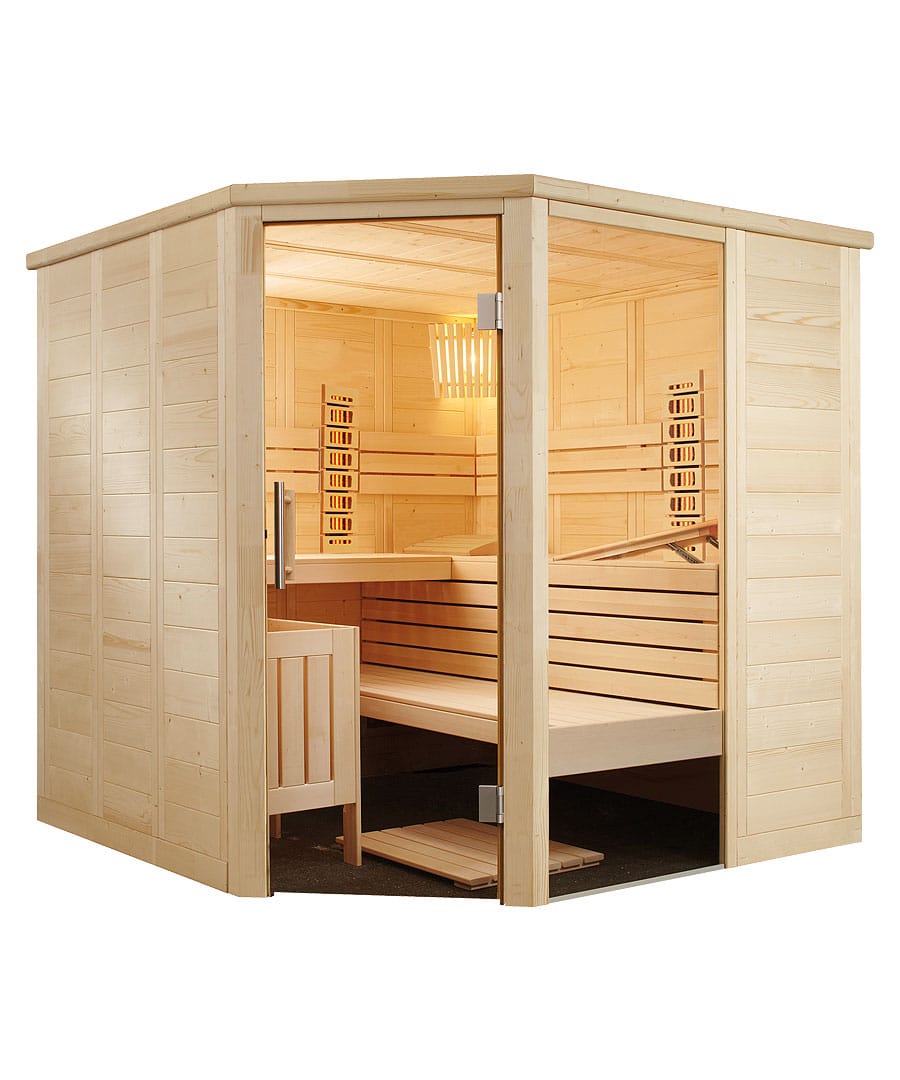
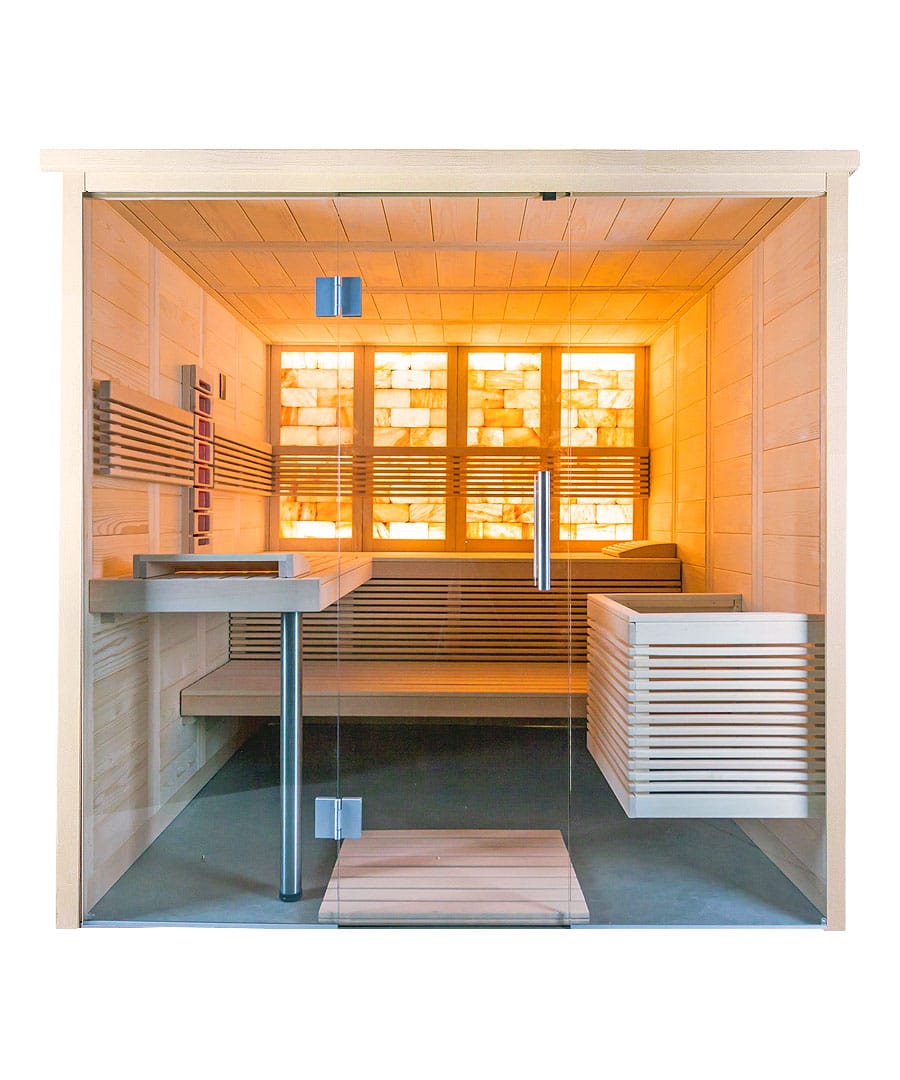
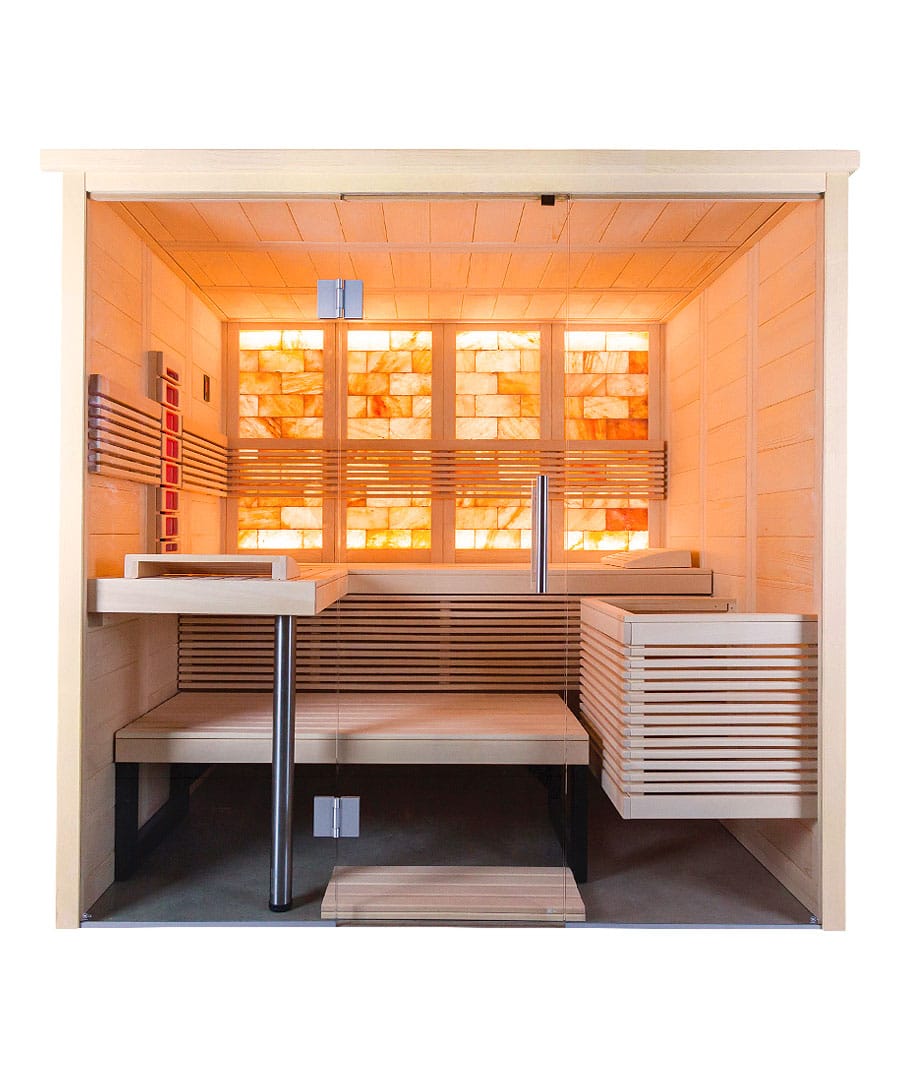
- A glass front changes the feel of an infrared sauna dramatically. Visually it’s lighter, more premium, and less claustrophobic. Thermally it introduces a large surface that doesn’t insulate like timber, so the cabin must compensate with smart heater placement and good seals. In a well-designed glass-front model, you still get even radiant coverage—often with panels on the sides and rear to balance the front. In a compromised model, the front feels cool and the heaters feel “too direct”. If you want glass, choose a cabin engineered for it, such as glass-front infrared sauna rooms, not a generic cabin with a bigger window.
- Ground fault protection
- Ground fault protection is the broader concept behind devices like RCDs: if current leaks to earth, power is cut quickly. Saunas involve warmth, sweat, and often bare skin contact, so ground fault protection is a sensible baseline. Even if your infrared sauna is “dry”, moisture and condensation can appear in real life through breathing and cleaning. A properly installed RCD, combined with correct earthing, sharply reduces shock risk. If a sauna is hardwired or installed in a spa environment, ground fault protection becomes even more important.
H
- Halogen / incandescent emitters
- Halogen or incandescent emitters are often used to produce near-infrared output in “full spectrum” infrared saunas. They typically glow visibly and can feel more intense because they operate at higher temperatures and deliver line‑of‑sight radiant energy. Some users love the strong sensation; others find it harsh or uncomfortable at close range. If you choose a cabin with these emitters, pay attention to placement and shielding so you are not staring into a bright source or sitting too close. Balanced designs combine these with broader panels for comfort.
- Heat exhaustion
- Heat exhaustion is a heat-related illness caused by excessive heat exposure and dehydration. Symptoms can include dizziness, nausea, headache, weakness, clammy skin, and feeling faint. Infrared saunas can still trigger heat exhaustion even though air temperatures are lower, especially if sessions are too long, hydration is poor, or the user has reduced heat tolerance. The fix is immediate: stop, cool down, drink water, and rest. If symptoms are severe or persist, seek medical help. The best prevention is conservative session duration and hydration.
- Heat shock proteins (HSP)
- Heat shock proteins are protective molecules your body increases in response to stressors like heat. They’re often mentioned in sauna conversations because regular heat exposure can trigger cellular stress responses linked to adaptation and resilience. The catch: translating lab mechanisms into real-world outcomes is complex, and evidence is stronger for repeated traditional sauna bathing than for every infrared product claim. Still, the general idea is plausible: consistent, tolerable heat exposure may support beneficial adaptation. Treat HSP talk as a mechanism, not a guarantee. The practical advice remains: consistent sessions, safe hydration, and sensible cooldown.
- Heat stroke
- Heat stroke is a medical emergency where the body’s temperature regulation fails. While rare in normal sauna use, risk increases if someone stays in too long, uses sauna while unwell, uses alcohol, or cannot recognise warning signs. Symptoms can include confusion, fainting, very high body temperature, and lack of sweating in severe cases. If you suspect heat stroke, seek emergency help immediately. The practical point for sauna users is simple: treat heat exposure as controlled and optional. Stop early if you feel wrong. Infrared sauna sessions should leave you relaxed, not shattered.
- Heat therapy (passive heating)
- Heat therapy is the broader concept behind sauna use: raising body temperature through external heat rather than exercise. Infrared saunas are one form of heat therapy, delivering radiant energy that warms the body directly, typically at lower air temperatures. Research on sauna bathing (especially Finnish sauna) suggests associations with cardiovascular and wellbeing outcomes, but evidence for specific infrared claims is still developing. The practical takeaway is about routine: heat exposure can be relaxing, can support recovery feel, and may encourage better sleep. Use it as a habit you can sustain, not as a one-off “hack”.
- Hemlock
- Hemlock is a common wood choice for infrared saunas because it’s stable, relatively low aroma, and tends to handle warm, dry environments well. It’s often chosen by people who want a clean, neutral-smelling cabin rather than strong cedar scent. Wood choice affects both aesthetics and comfort: grain feel, knotting, and how surfaces warm. Regardless of species, look for good finishing, smooth edges, and quality joinery. If you’re sensitive to smells, also consider low-VOC materials and allow the cabin to air out properly after installation.
- Humidity
- Infrared saunas are typically low-humidity environments because they don’t boil water on stones. That’s a big part of why they feel easier for many people: less “hot wet air” sensation, fewer breathing complaints, and less oppressive heat. However, humidity inside a cabin still changes with sweat and breathing, and it depends on ventilation and room conditions. If you want a drier feel, focus on airflow and after-session drying rather than chasing a humidity number. If you want steam, you’re looking at a different product category entirely.
- Hybrid sauna
- A hybrid sauna usually combines traditional sauna heating (hot air from a heater and stones) with infrared emitters in the same cabin. The advantage is flexibility: fast, intense traditional sessions when you want them, and gentler infrared sessions when you don’t. The trade-off is complexity: more components, more controls, and more ways to install incorrectly. If you’re the sort of person who changes their mind based on mood, hybrid makes sense. If you want simple and foolproof, dedicated infrared sauna rooms may be better.
- Hydration and electrolytes
- Hydration is the unglamorous cornerstone of safe sauna use. Water loss through sweat can be significant even in infrared cabins, especially for acclimatised users who sweat readily. Rehydrating with plain water is usually fine, but if you sweat heavily, do long sessions, or sauna after training, electrolytes can help you feel normal again. Avoid alcohol before sessions and don’t use sauna time as dehydration “weight cutting”. A simple habit: drink a glass of water before and after, and keep water nearby during the session.
- Hyperthermia (mild)
- Hyperthermia simply means elevated body temperature. Sauna use aims for mild, controlled hyperthermia—enough to trigger sweating and relaxation without pushing into dangerous overheating. With infrared saunas, the air temperature is often lower, but you can still overdo it if you stay too long or ignore warning signs. The sensible approach: start at a comfortable setting, limit early sessions, hydrate, and stop if you feel dizzy, nauseous, or unusually weak. “More heat” is not the same as “more benefit”. Use the sauna like training: progressive and consistent.
I
- Infrared radiation
- Infrared radiation is electromagnetic energy with wavelengths longer than visible red light. In a sauna context, infrared heaters convert electrical energy into radiant heat that warms the body primarily through absorption at the skin and near-surface tissues. Infrared is non-ionising, meaning it doesn’t carry enough energy to damage DNA the way ionising radiation can. The experience you feel depends on wavelength mix, emitter design, distance, and how the cabin reflects and re-radiates heat. Treat “infrared” as physics, not magic. Good cabins are built around comfort, safety, and even coverage.
- Infrared sauna panels
- Infrared sauna panels are the heating surfaces that emit infrared energy into the cabin. Panels vary by technology (carbon, ceramic, or other emitters), wattage, and size. What matters most is coverage: panels placed behind you, beside you, and at calf/foot level create an even, comfortable session. Panels only on one wall can feel one-sided and make you shift constantly. If you’re buying or building, treat panel layout like lighting design: even coverage beats a single bright spotlight.
- Infrared sauna vs traditional sauna
- Traditional saunas mainly heat the air (and optionally add steam), while infrared saunas mainly heat you through radiant energy. The practical difference is comfort: infrared often feels tolerable at lower air temperatures, which appeals to people who find hot air saunas overwhelming. Traditional saunas, however, have the strongest evidence base for many of the long-term associations often cited in sauna research. Neither is automatically “better”; they’re different tools. If you want a gentle daily habit, infrared sauna rooms can shine. If you want intense heat and steam rituals, look at traditional sauna rooms.
- Infrared thermometer
- An infrared thermometer measures surface temperature by detecting emitted infrared radiation. In saunas, it can be used to check heater surfaces, bench temperature, or wall hot spots without contact. It is not a perfect “body temperature” measure, and it does not replace built-in sensors, but it can help diagnose comfort issues (for example, one panel running much hotter than others). If you are testing “low EMF” or safety, an infrared thermometer is unrelated; it measures heat, not electromagnetic fields. Use it as a practical maintenance tool, not a marketing toy.
- Installation
- Installation is where good saunas become great—and where great saunas become a nightmare. Infrared cabins are often simpler than traditional saunas because there’s no stove, no flue, and no water system, but you still need correct electrical supply, clearances, and ventilation. Make sure the floor is level, the room is dry, and you have enough space to assemble panels without wrestling. Plan cable routing so it doesn’t get pinched or strained. If anything about the electrics feels “DIY risky”, get an electrician. A clean install improves safety, performance, and longevity.
- Insulation
- Insulation is the cabin’s ability to retain warmth and deliver a stable experience. Even though infrared saunas heat you directly, insulation still matters: it affects warm-up time, maximum achievable temperature, and comfort in colder rooms. Better-insulated cabins also reduce heat loss through large glass areas and help prevent drafts. Insulation isn’t just thickness; it’s also door seals, panel joins, and how well the cabin is assembled. If your sauna will live in a garage, outbuilding, or chilly room, prioritise insulation and seals over cosmetic extras.
- Intensity and distance
- Infrared intensity drops with distance. Sit closer to an emitter and it feels stronger; sit further away and it feels gentler. That’s why cabin geometry matters: a narrow 1-person cabin can feel more intense than a spacious 3-person cabin at the same setting. It’s also why “heater type” isn’t the whole story—panel placement and bench depth are just as important. If you want a gentler experience, look for wider cabins, more panels at lower output, and the ability to fine-tune settings via sauna controls.
- Ionising vs non-ionising radiation
- This distinction matters because the word “radiation” scares people. Ionising radiation (like X-rays) can damage DNA directly. Infrared is non-ionising; it carries much less energy per photon and primarily interacts with matter as heat. In an infrared sauna, the main safety considerations are heat exposure (overheating, dehydration) and electrical safety (wiring, earthing, RCD). If you see fear-based marketing implying infrared is “dangerous radiation”, that’s a red flag. Treat it as heat technology and apply sensible precautions.
- IP rating (water and dust protection)
- An IP rating describes how well an electrical component is protected against dust and water. Infrared cabins are usually dry environments, but sweat, cleaning, and humid rooms still introduce moisture. Components like lights, control panels, and power connections should be appropriate for warm environments and occasional dampness. Don’t assume “it’s indoors” means water is irrelevant; condensation and wiping down surfaces can reach fittings. If you’re installing near a shower room, pool, or spa setting, IP considerations become more important.
J
- Junction box
- A junction box is where electrical connections are safely enclosed and protected. In sauna installations, junction boxes matter because connections can run warm under sustained load, and any loose connection can generate heat and become a hazard. If your cabin is hardwired, the junction box location should be accessible for inspection and maintenance, not buried behind the sauna where you’ll never check it. For commercial setups, tidy and compliant electrical work is non-negotiable. If a supplier can’t explain how the power connects, choose a different supplier.
K
- Kiln-dried timber
- Kiln-dried timber has been dried in a controlled environment to reduce moisture content and improve stability. That matters in sauna cabins because wood that still holds excess moisture can warp, crack, or move as it heats and cools over repeated sessions. Stable timber also helps door alignment and seal quality over time. Most quality sauna products use kiln-dried wood, but the finish and joinery still matter. If a cabin arrives with noticeable warping or persistent creaks, it can indicate poor material control or poor assembly.
- Kilowatt (kW)
- A kilowatt (kW) is a measure of power—how fast your sauna can convert electricity into heat. In infrared cabins, kW helps you compare total heater output, but it doesn’t guarantee a better experience. A well-designed 1.6 kW cabin with excellent panel placement can feel more satisfying than a poorly laid-out 3 kW cabin. Use kW as a sanity check for circuit requirements and warm-up expectations, then focus on coverage, comfort, and controls. If you’re worried about running cost, kW is also the starting point for kWh calculations.
- Kilowatt-hour (kWh)
- A kilowatt-hour (kWh) is the unit your electricity bill uses. It’s power (kW) multiplied by time (hours). A 2 kW infrared sauna run for 45 minutes uses 1.5 kWh. Multiply that by your unit rate and you have a realistic session cost. This is the antidote to “cheap to run” marketing. If you want to compare cabins fairly, estimate kWh for your typical session, not the maximum output you’ll rarely use. Warm-up time and room temperature also change real consumption.
L
- Line-of-sight heating
- Line-of-sight heating means you feel the heater most strongly when it has a clear “view” of your body. Infrared emitters behave this way: angle and distance matter. This explains why some cabins feel fantastic in one posture and mediocre in another. Good designs solve the problem with multiple panels placed around the seating position so you’re warmed from several directions. Poor designs rely on a single wall of heaters and expect you to rotate like a kebab. When comparing products, look at where panels sit relative to a seated body, not relative to a marketing photo.
- Long-wave infrared (LWIR)
- Long-wave infrared is a band of infrared often discussed in sensing and thermal imaging, but in sauna marketing it’s sometimes used loosely to describe far‑infrared heat. The key point for buyers: don’t get lost in labels. What you actually experience is radiant warmth, which depends on heater design, surface temperature, and where energy is delivered around your body. If a brochure throws around “long-wave” without specifying anything measurable, treat it as vague. Choose based on build quality, comfort, and controllability.
- Low EMF
- “Low EMF” should mean “measured lower EMF at a defined distance and position” — not a vague badge. Infrared saunas can vary widely in EMF at the bench depending on wiring layout, controller design, and shielding. If you care, ask for bench‑level readings, the meter used, and the frequency band measured (typically 50 Hz ELF fields in the UK). Also remember that everyday appliances produce EMF too; context matters. Low EMF is a design discipline, not a miracle. If a supplier won’t discuss measurement, assume it’s marketing.
- Low VOC materials
- VOCs (volatile organic compounds) are chemicals that can off-gas from adhesives, finishes, and manufactured boards. In an infrared sauna, warm surfaces can amplify odours and make poor materials more noticeable. Low VOC design matters for comfort, especially for sensitive users. Look for solid wood construction where possible, minimal glue exposure, and finishes designed for warm environments. After installation, run a few short “air-out” sessions with ventilation to clear residual smells. If a cabin smells aggressively chemical weeks later, something is wrong.
M
- Magnetic field
- A magnetic field is produced by electric current. In sauna “EMF” discussions, magnetic field strength at 50 Hz (UK mains) is often the number people are quoting, expressed in milligauss or microtesla. Magnetic fields drop quickly with distance from the source, so wiring layout and heater proximity to the bench matter. The practical perspective is context: many household appliances produce magnetic fields during use. If “low EMF” is important to you, compare bench-level readings and ask for measurement conditions. Avoid fear-based claims; insist on data.
- Mid infrared (MIR)
- Mid infrared sits between near and far infrared on the spectrum. In sauna marketing, MIR is often bundled into “full spectrum” claims, but specific MIR output is rarely measured or expressed clearly. Practically, MIR discussions are usually shorthand for “a slightly different feel and penetration profile compared with far‑infrared panels”. If you’re comparing full spectrum cabins, focus on heater type (often halogen/quartz for near IR) combined with carbon panels for far IR. The exact band labels matter less than comfort, safety, and layout.
- Motion sensor (occupancy)
- Some infrared systems use an occupancy sensor to detect movement and improve safety—either by preventing operation when the cabin is empty or by helping automate timeouts. It’s useful in commercial settings and handy at home if you’re forgetful, but it should never replace basic safety design like timers and thermal cut-outs. If a sensor is too sensitive it can be annoying; if it’s not sensitive enough it’s pointless. If you’re considering add-on sensors, look at purpose-built components such as the Tylo IR eye rather than generic gadgets.
- Mould prevention
- Mould is uncommon in well-used infrared saunas, but it can appear if a cabin is left damp, unventilated, or installed in a humid room. Prevention is simple: wipe surfaces after use, leave the door ajar, and ensure airflow around and through the cabin. Avoid placing damp towels on benches for hours. If your sauna is in a spa setting, consistent cleaning routines matter more than fancy products. Timber is resilient when it can dry; it degrades when it stays wet. If you smell mustiness, fix airflow first.
N
- Near infrared (NIR)
- Near infrared sits closest to visible red light and is often used in “full spectrum” sauna designs via glowing emitters. People also associate NIR with photobiomodulation and red/NIR light therapy, but sauna emitters are primarily heat devices, not precision medical light sources. NIR can feel more intense because of higher emitter surface temperatures and line‑of‑sight exposure. If you like a stronger radiant sensation, you may prefer NIR-heavy cabins; if you’re heat sensitive, you may prefer far‑infrared panel designs. Don’t stare into emitters and prioritise balanced layout.
- Noise (fans and electronics)
- Most infrared saunas are quiet, but noise can still matter—especially if you use the sauna for meditation or guided breathing. Potential noise sources include small ventilation fans, buzzing transformers, clicking relay controls, and rattling speakers. A well-built cabin feels calm and mechanically “solid”; a cheap one can sound like a laptop charger in a tin box. If you are sensitive to noise, prioritise reputable brands and simpler control systems. If possible, test a similar unit or ask the supplier about noise sources. A quiet sauna gets used more often.
O
- Off-gassing
- Off-gassing is the release of odours and chemicals from materials, especially when warmed. New infrared saunas sometimes smell “woody”, which is normal, but they should not smell like strong solvents or plastics for weeks. Off-gassing is influenced by glue, varnish, insulation materials, and any synthetic boards. The fix is usually ventilation and a few gentle heat cycles. The prevention is better materials: solid timber, minimal adhesives, and low-VOC components. If you’re sensitive, ask what woods and finishes are used and avoid bargain cabins with vague material descriptions.
- Overheat protection
- Overheat protection is a safety cut‑out that stops operation if the system exceeds a safe temperature. It protects against sensor failure, blocked vents, or control malfunctions. In infrared cabins, overheating is less about “air too hot” and more about preventing components from running beyond their design limits. Good overheat protection is resettable in a controlled way (not by poking a random hidden button without understanding why it tripped). If overheat protection trips repeatedly, it’s telling you something: poor ventilation, wrong clearance, or electrical issues.
P
- Panel placement
- Panel placement is arguably the biggest determinant of how good an infrared sauna feels. Even heat from multiple directions allows you to relax; one-sided heat makes you constantly shift and makes sessions feel harsher. Ideal placement typically includes rear panels, side panels, and lower panels for calves or feet. Under‑bench heaters can add comfort without blasting your torso. When comparing cabins, ignore gimmicks and look at layout diagrams: where are the emitters relative to a seated body? If that’s not clear, ask.
- PAT testing (commercial environments)
- PAT testing (Portable Appliance Testing) is a common UK practice for checking electrical safety of portable appliances in workplaces. Whether a sauna needs PAT testing depends on how it is installed and classified, but in commercial settings you should expect routine electrical safety checks and documented maintenance. The bigger point: commercial sauna operation requires a safety mindset—installation, inspection, cleaning routines, and clear user guidance. If your infrared sauna is part of a spa or gym, plan for ongoing checks rather than treating it as a “fit and forget” box.
- PID control
- PID (proportional–integral–derivative) control is a method used in many heating systems to maintain stable conditions without aggressive on/off cycling. In saunas, PID-style control can mean steadier output and fewer swings, which improves comfort. Not every infrared controller uses PID, and not every product needs it, but the concept helps explain why some cabins feel smooth and predictable while others feel pulsed. For buyers, the takeaway is simple: quality controls matter as much as heater wattage. Choose reputable sauna controls and you’ll usually get better stability by default.
- Portable infrared sauna (cocoon)
- Portable infrared “cocoons” wrap the body in a heated enclosure, often combining infrared with steam or other features. They can be useful where space is limited, but they’re a different experience from a timber cabin: airflow is different, comfort is different, and you don’t get the same seated relaxation. If you’re considering portable options, treat them as a separate category with their own safety and hygiene considerations. Make sure materials are heat-safe, controls are reliable, and cleaning is practical. A product like the Neoqi Relax infrared steam sauna cocoon sits firmly in this portable niche.
- Power modulation
- Power modulation is how the sauna adjusts heater output to reach and hold your chosen setting. Some systems simply switch heaters on and off; others can modulate more smoothly. The benefit of better modulation is comfort: fewer swings, less “pulsing” sensation, and more predictable sessions. In practice, modulation quality is tied to the controller, sensors, and heater design. If you want a calm, repeatable routine, prioritise reputable sauna controls over flashy features. Advanced controllers can also manage lighting and presets more elegantly.
- Precautions and contraindications
- Infrared saunas are generally well tolerated, but they are still a heat stressor. If you’re pregnant, have cardiovascular disease, uncontrolled blood pressure, kidney issues affecting fluid balance, or you’re on medications that alter heat tolerance, you should check with a clinician before making sauna a routine. Never combine sauna use with alcohol, and don’t use it when you’re ill with fever. If you feel dizzy, nauseous, or unusually weak, stop immediately and cool down. The goal is controlled, comfortable heat exposure—never endurance. This glossary is informational, not medical advice.
- Preheat and warm‑up time
- Warm‑up time is how long the cabin takes to feel ready. Infrared saunas can feel effective before the air temperature climbs because radiant heat is immediate, but the cabin still benefits from a short warm‑up so benches and surfaces are comfortable. Warm‑up time depends on total heater wattage, panel placement, insulation, and room temperature. If you’re in a cold space, expect longer warm‑up and consider a better insulated model. A practical approach: preheat 10–20 minutes, then start your session; adjust based on feel.
Q
- Quartz emitters
- Quartz emitters are often used in near‑infrared heater designs, sometimes described as “quartz” or “quartz halogen”. They can deliver strong radiant heat quickly, which is why they appear in some full spectrum cabins. The trade-off is intensity and potential glare: sitting close can feel harsh, and staring into a glowing source can be uncomfortable. If you like a stronger, more direct heat sensation, quartz emitters may suit you. If you prefer a gentler, wraparound feel, carbon panel-heavy cabins are usually better.
R
- Radiant heat
- Radiant heat is energy transferred by electromagnetic waves rather than moving air. That’s the core of how infrared saunas work: heaters emit infrared energy that your body absorbs, warming you directly. The benefit is comfort at lower air temperatures, which often makes longer sessions possible. The trade-off is that radiant heat is directional: layout and distance matter. A great infrared cabin feels like being warmed from all sides; a poor one feels like being toasted from one wall. When evaluating models, look at panel placement and whether the cabin avoids intense hotspots.
- RCD (residual current device)
- An RCD is a protective device that cuts power quickly if it detects current leaking to earth, which can happen in fault conditions. In plain terms, it reduces shock risk. For any sauna—infrared included—an RCD is sensible, especially in spaces where moisture, sweat, and bare feet are involved. Many modern UK consumer units already have RCD protection on circuits, but you should confirm. Don’t treat electrical safety as a checkbox; treat it as the foundation that allows you to relax. If a cabin is hardwired, RCD protection is even more important.
- Recovery (post-exercise)
- Many people use infrared saunas for recovery because the experience is relaxing, warming, and can reduce the “tight” feeling after training. Heat exposure can increase blood flow and can feel soothing on muscles and joints. The evidence base for specific recovery outcomes varies, and much of the strongest sauna research is on traditional sauna bathing, but the subjective recovery effect is real for many users. The practical tip: keep post-exercise sessions moderate, hydrate properly, and don’t use sauna as a substitute for sleep and nutrition. If you want a consistent recovery habit, choose a cabin you’ll actually use regularly.
- Reflectors
- Reflectors are surfaces used behind or around emitters to direct more infrared energy into the cabin rather than into the heater housing. They influence efficiency and comfort: better reflectors can reduce wasted heat and create a more even radiant field. In practice, reflectors are part of heater engineering and build quality; you rarely see them in marketing photos. Still, this is one reason reputable heater brands often feel better at the same wattage—they manage energy direction and surface temperatures more intelligently. As a buyer, look for trusted infrared panels and proven manufacturers rather than unknown heater parts.
- Relative humidity
- Relative humidity is how much moisture the air holds compared with the maximum it could hold at that temperature. Infrared saunas generally feel dry because they don’t intentionally add steam, but humidity still changes as you sweat and breathe. In a tiny cabin with poor airflow, humidity can creep up and feel stuffy. If you want a crisp, dry feel, focus on ventilation and leaving the door ajar after sessions. If you want controlled humidity and steam bursts, you’re looking at traditional sauna or steam room products.
- Remote start
- Remote start can be convenient—preheating the cabin before you step in—but it also introduces safety considerations. If a sauna can be powered without a person present, you need confidence in overheat protection, timers, and that nothing has been left inside the cabin that could overheat (towels, cleaning products, etc.). In commercial settings, remote start should be controlled by staff, not by random users. For many homes, the simplest and safest approach is still manual start with a short preheat. If you want remote features, choose smart controls that are designed for this use, not generic plugs.
- Respiratory comfort
- People with sensitive airways often prefer infrared saunas because there’s no deliberate steam and air temperatures are lower. That can mean less irritation and easier breathing during sessions. However, respiratory comfort still depends on ventilation, material smells (off-gassing), and whether the cabin feels stale. If you’re prone to headaches in warm rooms, pay extra attention to airflow and session pacing. Always start gently and build up. If you have a diagnosed respiratory condition, check with a clinician about heat exposure. Comfort is the goal; strain is the warning sign.
S
- Safety standards (IEC 60335-2-53)
- Safety standards matter because saunas combine heat, electricity, and enclosed spaces—three things that should never be improvised. IEC 60335-2-53 is a key standard covering safety for electric sauna heating appliances and infrared emitting units. For buyers, you don’t need to read standards cover-to-cover, but you should care that reputable manufacturers design and test to recognised requirements and that products are correctly marked for the UK market. If a seller can’t provide documentation, support, or clear installation guidance, walk away. Sauna safety isn’t the place to bargain hunt.
- Sauna etiquette
- Sauna etiquette is the simple set of behaviours that keep sauna use comfortable and respectful—especially in shared or commercial settings. Shower before use, sit on a towel, keep sessions within reasonable time, and avoid strong scents that linger. In infrared cabins, etiquette also includes wiping sweat off benches after use and leaving the door slightly ajar so the cabin dries out. If the sauna is used by multiple people, post clear session guidance and cleaning expectations. Good etiquette protects the cabin, improves hygiene, and makes the experience better for everyone.
- Sentiotec MinimY
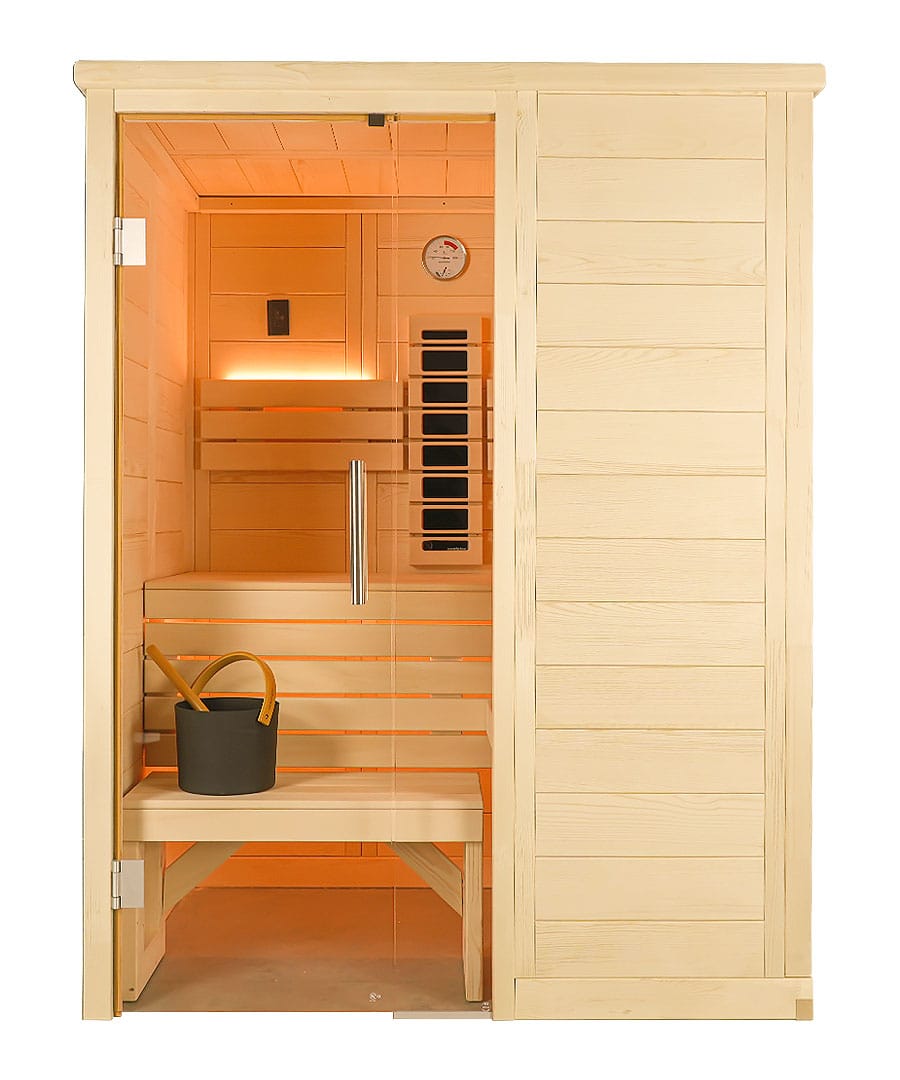
- Sentiotec MinimY is a 1-person infrared home sauna kit format, designed for compact spaces and solo routines. One-person cabins can feel more intense simply because you’re closer to the heaters, so panel placement and bench ergonomics become critical. For smaller cabins, pay attention to ventilation, door seal quality, and whether you can sit comfortably upright without feeling cramped. If you want a dependable daily habit and you’re realistic about space, a well-designed 1-person cabin can be a fantastic fit.
- Sentiotec Vitamy
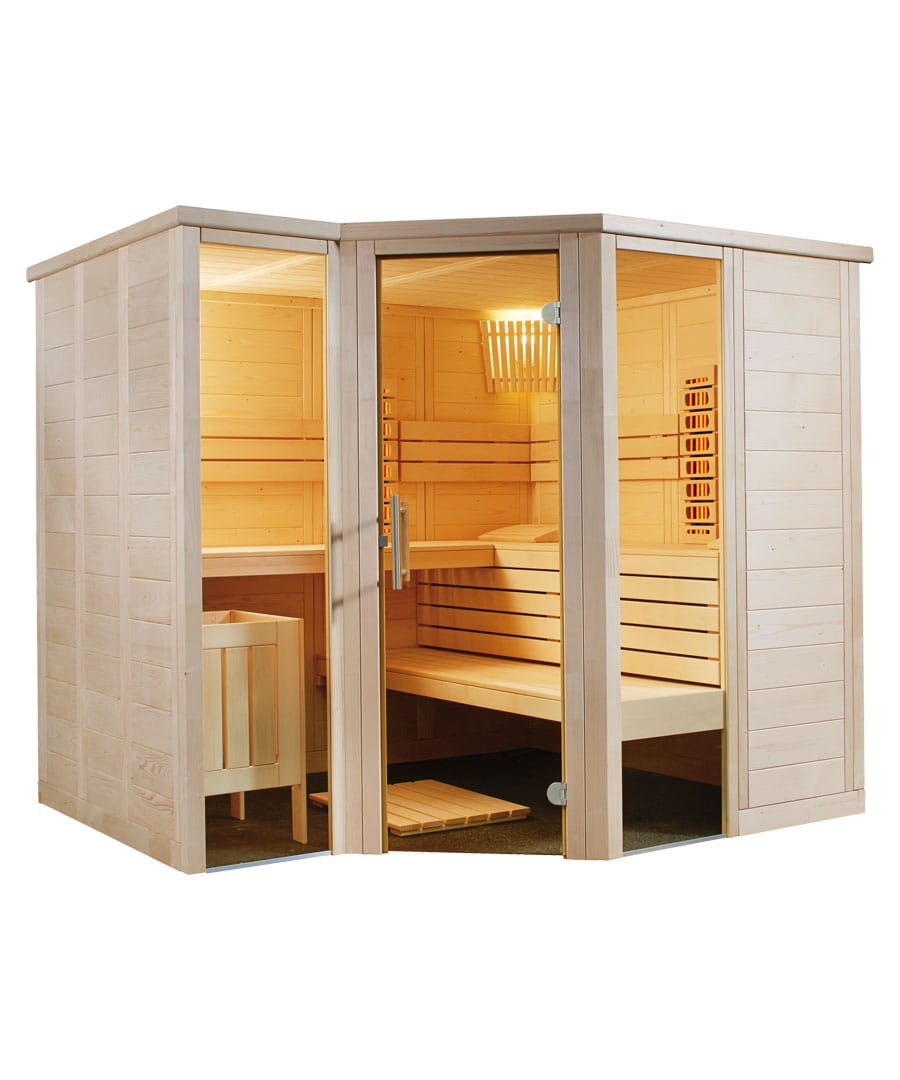
- Sentiotec Vitamy is a 2-person infrared sauna cabin format often featuring a glass front and a compact home-friendly footprint. In this style of cabin, the key considerations are panel coverage, bench comfort, and how well the design compensates for the glass area thermally. Glass-front infrared cabins can feel more open and premium, but they rely on strong side and rear heating to avoid cool zones. If you want an infrared routine that feels calm and modern without taking over your room, cabins like Vitamy sit neatly in that niche.
- Session duration
- Session duration is highly individual. Many people do 20–45 minutes in an infrared sauna because the air temperature is lower, but the right number is the one you can repeat comfortably. Early on, shorter sessions are smarter: you learn your heat tolerance, you avoid dehydration, and you build a sustainable routine. A good rule is to end sessions feeling relaxed and warm, not wrecked. If you’re chasing a “max time” as a badge of honour, you’re missing the point. Consistency beats extremes.
- Shielding
- Shielding is the use of conductive or magnetic materials to reduce electric fields, magnetic fields, or radiofrequency interference in a device. In infrared saunas, shielding is sometimes used to reduce bench-level electric fields or to manage wiring emissions, but results depend on design details. Blanket statements like “shielded” are meaningless without measurement at the bench. The most reliable EMF reduction strategies are basic engineering: wiring layout, distance from users, and robust earthing. Treat shielding as one tool in a broader design, not as a miracle layer.
- Smart controls
- Smart controls can include presets, remote start, app control, usage tracking, and integrations for lighting or audio. They can be genuinely useful—especially in commercial setups where consistency matters—but they also add complexity. The best smart controls stay simple: clear presets, stable connectivity, and manual override. The worst are glitchy apps that make basic use harder. If you want smart features, treat them like any other tech purchase: ask about support, firmware updates, and how it behaves when Wi‑Fi drops. For many homes, a solid control panel with a reliable timer is the better experience.
- Spectrum (IR-A, IR-B, IR-C)
- You’ll sometimes see infrared described as IR‑A, IR‑B, and IR‑C bands (roughly corresponding to near, mid, and far infrared regions). These labels are useful for describing physics, but they’re often abused in marketing because most consumers can’t verify claims. What matters to your body is the sensation created by the heater design: emitter surface temperature, distance, coverage, and stability. Use spectrum labels as a way to compare designs (full spectrum vs far infrared), but don’t treat them as proof of superiority. A balanced cabin that you enjoy using beats a spec sheet full of vague bands.
- Sweat response
- Sweating is your body’s cooling mechanism. In infrared saunas, you can sweat heavily even at modest air temperatures because radiant heat warms skin directly. Sweat rate varies hugely by person: genetics, acclimatisation, hydration, and even what you ate that day all matter. Don’t use sweat as a competition or a “detox score”. Use it as feedback: if you’re sweating excessively and feeling weak, you probably need to shorten the session or hydrate better. If you barely sweat but feel relaxed, that can still be a successful session.
T
- Temperature range
- Infrared saunas usually operate at lower air temperatures than traditional saunas, but “best temperature” is not universal. Some people love 45–50°C sessions; others prefer 55–60°C. The right range depends on your heat tolerance, the cabin’s panel layout, and what you’re using it for (relaxation vs recovery vs gentle daily habit). Start lower, focus on comfort, and adjust slowly. If a cabin only feels good when cranked to the maximum, that can be a sign of weak panel coverage or poor layout.
- Thermal cut‑out
- A thermal cut‑out is a safety device that interrupts power when a component reaches a specified temperature. It protects heaters, wiring, and the cabin itself from overheating in fault conditions. In an infrared sauna, thermal cut‑outs can be located in heaters, control boxes, or other critical points. If a thermal cut‑out trips, it is usually signalling a real issue: blocked ventilation, wrong installation clearances, or component failure. Do not bypass it. Resolve the root cause and follow manufacturer guidance. Reliable safety cut-outs are one reason reputable brands are worth the money.
- Thermistor and temperature sensing
- A thermistor is a temperature-sensitive resistor commonly used as a sensor in heating systems. In infrared saunas, sensors influence comfort: they control heater cycling, prevent overheating, and help deliver predictable sessions. Sensor placement matters—a sensor too close to a heater can misread the cabin and cause odd cycling; too far can make control sluggish. When comparing cabins, you rarely get sensor details, but you can infer quality from stability: does the sauna hold a steady feel or constantly overshoot and correct? Good sauna controls and good sensor design go together.
- Thermoregulation
- Thermoregulation is how your body maintains a stable internal temperature. Sauna use deliberately challenges this system: your skin warms, blood vessels dilate, sweating increases, and heart rate can rise as your body moves heat to the surface for cooling. The goal is controlled stress, not distress. Understanding thermoregulation helps you use infrared saunas more intelligently: hydrate, build tolerance, cool down gradually, and avoid sessions when you’re already overheated or unwell. If you feel “wrong”, stop—your body is not being dramatic; it’s doing safety signalling.
- Timer
- A timer is both convenience and safety. It prevents sessions from drifting into “how long have I been in here?” territory and reduces risk if you doze off. In commercial environments, timers also create fair, predictable user cycles. The best timers are simple: clear duration, easy start/stop, and automatic shut‑off. Overcomplicated timer logic is how you end up with support calls and frustrated customers. If you want smarter scheduling, look for smart controls that still allow a straightforward manual timer. For hardware components, products like the Tylo timer IR exist for panel systems.
- Traditional sauna
- Traditional saunas heat the air using a stove and stones, and you can increase humidity by throwing water on the stones. They deliver a very different sensory experience: hotter air, stronger convective heat, and the ritual of steam bursts. Traditional sauna bathing also has a stronger research base for many long-term associations often cited in sauna discussions. Infrared saunas, by contrast, are usually lower air temperature and more “direct warmth”. If you want the classic sauna ritual, choose traditional sauna rooms. If you want a gentler daily habit, infrared sauna rooms may suit better.
- Twisted pair wiring
- Twisted pair wiring is a technique where two conductors are twisted together to reduce electromagnetic interference, especially in signal cables. In sauna systems with sensors, smart controls, or low-voltage signalling, twisted pairs can improve reliability and reduce noise pickup. This is not a headline feature for most buyers, but it is another marker of thoughtful engineering. Poor cabling can cause false sensor readings, glitchy controls, or audio interference. If you
U
- Under‑bench heaters
- Under‑bench heaters are panels or strips installed beneath the bench to warm legs and feet without blasting your torso. They can transform comfort, especially for people who run cold or who do longer sessions at modest temperatures. Under‑bench heat also helps balance cabins that have lots of glass at the front, because it adds warmth lower down where drafts are felt. If you’re building a panel-based infrared room, under‑bench mounting kits exist specifically for this purpose.
V
- Ventilation
- Ventilation is fresh air exchange: it controls stuffiness, helps materials dry out, and supports comfortable long sessions. Infrared cabins are often installed in bedrooms, gyms, and spa rooms where airflow may be limited, so ventilation is easy to overlook. Good cabins have vents designed into the structure; good installations keep those vents unblocked and allow air to move around the cabin exterior too. If your sauna smells stale, feels oppressive, or shows signs of moisture build‑up, ventilation is usually the fix. Leave the door ajar after use and keep clearances.
- Voltage
- Voltage is the electrical “pressure” that drives current. In the UK, mains voltage is nominally 230V, which is what most home infrared saunas are designed for. Voltage matters mainly for compatibility: plug type, controller rating, and whether a cabin is intended for single‑phase or three‑phase setups. Most buyers shouldn’t obsess over voltage, but you should confirm it matches your supply and that installation instructions are clear. Incorrect voltage assumptions can lead to damage, nuisance faults, and invalid warranties.
W
- Warranty and support
- Warranty is more than a number of years; it’s a proxy for how confident the manufacturer and retailer are in the product and how easy problems are to resolve. Infrared saunas combine heaters, controllers, lighting, and timber—so support matters. Check what’s covered (heaters vs electronics vs timber), whether parts are stocked, and who actually handles service in the UK. A strong warranty with no practical support is just a comforting PDF. Choose suppliers who can answer technical questions and help with installation and aftercare.
- Wattage
- Wattage is power measured in watts. In infrared saunas, total wattage influences warm‑up time and how much radiant energy is available, but it’s not a direct proxy for comfort or “effectiveness”. Layout and coverage matter more than raw power. A cabin with multiple lower-wattage panels can feel smoother and more even than one with fewer high-intensity emitters. Use wattage to understand electrical requirements and to estimate running cost via kWh, then judge models on ergonomics, panel placement, and control quality.
- Wavelength (nm and µm)
- Wavelength is how infrared is quantified on the electromagnetic spectrum, usually in nanometres (nm) for near infrared and micrometres (µm) for far infrared. Different wavelength bands interact with tissue differently because absorption and scattering vary by wavelength and by the water content of skin. In sauna buying, wavelength claims are often vague or unverified, so treat them as supporting info rather than the main decision point. What you can evaluate reliably is the cabin design: panel placement, comfort, and controllability. If a brand is serious, it can state measurable ranges and how they were tested.
- Wi‑Fi and app control
- Wi‑Fi and app control can be helpful if it genuinely makes use easier: preheating, presets, and usage tracking. But it can also become a source of frustration if the app is unreliable or the sauna becomes dependent on a phone connection. The best approach is to treat Wi‑Fi as optional: the sauna should still work perfectly with physical controls. If you want app features, ask about support, updates, and what happens when Wi‑Fi drops. In commercial settings, keep control with staff rather than end users.
- Wood species (spruce, linden, cedar)
- Wood choice affects smell, appearance, stability, and surface feel. Spruce and linden are common in Scandinavian sauna products and tend to be stable and pleasant in warm environments. Cedar is aromatic and naturally resilient but can be overpowering for some users. In infrared cabins, because temperatures are lower and humidity is usually low, most quality woods perform well if they’re properly dried and assembled. Prioritise workmanship: smooth surfaces, good joinery, and minimal resin or knot issues. If you’re sensitive to aroma, choose a more neutral wood and focus on low-VOC construction.